UART Discussion
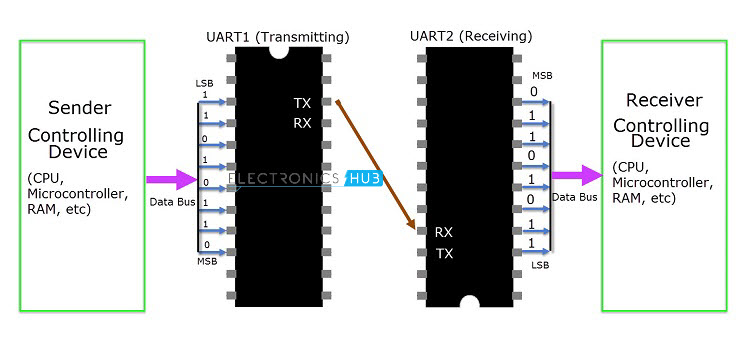
Universal Asynchronous Receiver Transmitter is a serial communication device that performs parallel – to – serial data conversion at the transmitter
I am Prasnjit Kumar Sharma from Madhubani Bihar. I have completed my B. Tech IT from Sri Ramakrishna engineering college and I have done specialization on Threat handling and risk analysis. Currently, i am working with the L&T Technology on the connected security framework project, and recently I have completed my CISSP(Certified Information System Security Professional) certification from simplilearn. Along with this, now I am a candidate of (ISC)2.
- Can you explain the UART data format and baud rate?
A Universal Asynchronous Receiver-Transmitter (UART) is a serial communication interface that transmits data bits one by one. UART data format includes: Start bit, Data bit, Check bit, Stop bit, Optional parity bit. The UART's data format is configurable, the speed at which the data is transmitted is mentioned using Baud Rate. Both the transmitting UART and Receiving UART must agree on the Baud Rate for successful data transmission, and the Baud Rate is generated by dividing the clock frequency by a predetermined divisor. For example, a UART might have a baud rate of 9600, 19200, 38400, or 115200 bits per second (bps). The UART's data format also includes: Standard UART: 115200 bps, 8-bit data length, 1 start bit, and 1 stop bit, plus no parity bit Odd parity: The number of "1"s in valid data and parity bits is an odd number. Even parity: The parity bit is set so the total number of data bits, including the parity bit, is even. The UART's start and stop bits indicate where user data begins and ends, or to “frame” the data
- What are some common vulnerabilities associated with UART communication?
Some common vulnerabilities associated with UART (Universal Asynchronous Receiver-Transmitter) communication include:
- Eavesdropping: Since UART communication typically occurs over physical wires, an attacker could tap into these wires and intercept the data being transmitted, leading to a compromise of sensitive information.
- Data Manipulation: Attackers can inject or alter data being transmitted over UART, leading to unauthorized access, data corruption, or manipulation of system behavior.
- Replay Attacks: Attackers may capture UART data and replay it at a later time to simulate legitimate communication, potentially bypassing authentication mechanisms or triggering unintended actions in the system.
- Physical Access: UART interfaces are often accessible externally on devices, making them susceptible to physical tampering or manipulation if adequate physical security measures are not in place.
- Denial of Service (DoS): An attacker could flood the UART interface with excessive data or commands, causing the system to become unresponsive or crash, thus denying service to legitimate users.
- Firmware Injection: Exploiting vulnerabilities in UART communication protocols, attackers may inject malicious firmware updates, compromising the integrity and security of the device. To mitigate these vulnerabilities, it's important to implement security measures such as encryption, authentication, integrity checks, and access controls in UART communication systems. Additionally, physical security measures should be employed to prevent unauthorized access to UART interfaces. Regular security assessments and firmware updates can also help in maintaining the security of UART-enabled devices.
- How can an attacker exploit UART vulnerabilities in embedded systems?
The Universal Asynchronous Receiver/Transmitter (UART) interface is a common method of serial communication used in embedded systems, microcontrollers, and other electronic devices. While UART itself is a relatively simple communication protocol, it can be vulnerable to exploitation if proper security measures are not implemented. Here are some ways an attacker might exploit UART interfaces:
- Eavesdropping: An attacker could tap into the UART communication lines to intercept data being transmitted between devices. This could lead to the theft of sensitive information such as passwords, cryptographic keys, or other data.
- Replay Attacks: By eavesdropping on UART communication, an attacker could record and replay messages to perform unauthorized actions or gain access to a system.
- Fuzzing: Fuzzing involves sending unexpected or malformed data to a system to trigger unexpected behavior. An attacker could fuzz a UART interface by sending various payloads to uncover vulnerabilities such as buffer overflows, input validation issues, or other software bugs.
Man-in-the-Middle (MitM) Attacks: An attacker could place themselves between two devices communicating over UART, intercepting and potentially modifying the data passing between them. This could allow the attacker to alter commands, inject malicious code, or manipulate the communication flow.
- Denial of Service (DoS): An attacker could flood the UART interface with a large volume of traffic, causing the system to become overwhelmed and unable to respond to legitimate requests. This could result in a denial of service for legitimate users or processes.
- Exploiting Default or Weak Credentials: Some UART interfaces may have default or weak credentials for authentication. An attacker could attempt to exploit these credentials to gain unauthorized access to the system.
- Physical Access Exploitation: If an attacker gains physical access to a device with an exposed UART interface, they may be able to directly connect to it and gain control over the system, bypassing any network security measures. To mitigate these risks, it's essential to implement security best practices such as encryption, authentication, access control, and data validation when using UART interfaces. Additionally, physical security measures should be considered to prevent unauthorized access to UART ports. Regular security audits and updates to firmware or software can also help to address any vulnerabilities that may be discovered.
- What tools and techniques are commonly used for UART penetration testing?
Testing the security of UART interfaces, often referred to as UART penetration testing, involves using various tools and techniques to identify and exploit vulnerabilities. Here are some commonly used tools and techniques for UART penetration testing:
Logic Analyzers: Logic analyzers are hardware tools used to capture and analyze digital signals. They can be used to monitor UART communication between devices, capture transmitted data, and analyze the timing and protocol used.
Serial Port Monitors: Serial port monitors are software tools that intercept and log data sent and received through UART interfaces. They can be used to monitor communication between devices, analyze the data exchanged, and identify potential vulnerabilities.
Bus Pirate: The Bus Pirate is a versatile tool for interfacing with various serial communication protocols, including UART. It can be used to sniff UART traffic, inject commands, and perform other tasks to test the security of UART interfaces.
Serial Protocol Analyzers: Serial protocol analyzers are specialized tools designed specifically for analyzing serial communication protocols like UART. They can decode UART communication, analyze protocol errors, and provide insights into the behavior of UART devices.
Fuzzing Tools: Fuzzing tools such as American Fuzzy Lop (AFL) or Peach Fuzzer can be used to send malformed or unexpected data to UART interfaces in order to uncover vulnerabilities such as buffer overflows or input validation errors.
Reverse Engineering Techniques: Reverse engineering techniques can be used to analyze the firmware or software running on devices with UART interfaces. By disassembling, decompiling, or debugging the code, security researchers can identify potential vulnerabilities and security weaknesses.
Physical Access Techniques: Physical access techniques involve directly accessing the UART interface on a device by soldering wires or using connector pins. Once access is gained, an attacker can monitor communication, inject commands, or modify firmware to exploit vulnerabilities.
Emulation and Simulation: Emulation and simulation tools can be used to create virtual environments for testing UART communication without the need for physical hardware. This allows security researchers to test different attack scenarios in a controlled environment.
It's important to note that UART penetration testing should only be performed on systems or devices that you have explicit permission to test, as unauthorized testing could lead to legal consequences. Additionally, thorough documentation and reporting of findings are essential to ensure that any identified vulnerabilities can be properly addressed and mitigated.
- How do you perform UART sniffing and interception of data?
Performing UART sniffing involves capturing and analyzing the data being transmitted between devices via UART communication. Here's a general outline of how to perform UART sniffing and intercept data:
Identify UART Pins: First, you need to identify the UART pins on the target device. These pins are typically labeled as TX (transmit), RX (receive), GND (ground), and sometimes VCC (power). You can find this information in the device's datasheet, and documentation, or by using tools like a multimeter or logic analyzer to probe the pins.
Connect to UART Pins: Once you've identified the UART pins, you need to physically connect to them. This can be done by soldering wires directly to the pins or by using connector pins or clips if available. Make sure to connect the TX pin of the target device to the RX pin of your sniffing device, and vice versa. Also, connect the GND pins together to ensure common ground.
Select Sniffing Tool: Choose a suitable tool for UART sniffing. This could be a logic analyzer, serial port monitor, Bus Pirate, or any other tool capable of capturing and analyzing UART data.
Configure Sniffing Tool: Configure your sniffing tool to capture UART data. This may involve selecting the appropriate baud rate, parity, stop bits, and other settings based on the UART configuration of the target device. Refer to the device's documentation or datasheet for this information.
Capture Data: Start capturing data using your sniffing tool while the target device is in operation. You should see the transmitted data displayed in the sniffing tool's interface. Analyze the captured data to identify any patterns, commands, or information of interest.
Interpret Data: Once you've captured the data, you'll need to interpret it to understand its meaning. This may involve decoding the UART protocol, identifying command structures, or extracting relevant information such as passwords, commands, or sensor readings.
Further Analysis: Depending on your goals, you may perform further analysis on the captured data. This could include reverse engineering firmware, fuzzing to identify vulnerabilities, or simulating attacks to test the security of the system.
Document Findings: Document your findings, including any vulnerabilities, interesting commands, or other relevant information. This documentation will be important for further analysis, reporting, and remediation.
It's important to note that UART sniffing should only be performed on devices or systems that you have explicit permission to test, as unauthorized sniffing could violate privacy laws or terms of service agreements. Additionally, always handle sensitive data with care and ensure that proper security measures are in place to protect it from unauthorized access or disclosure.
What are some best practices for securing UART communication in embedded systems?
Securing UART communication in embedded systems is essential to protect sensitive data, prevent unauthorized access, and ensure the integrity and confidentiality of communications. Here are some best practices for securing UART communication in embedded systems:
Encryption: Implement encryption mechanisms to secure data transmitted over UART. Use algorithms such as AES (Advanced Encryption Standard) to encrypt sensitive data before transmission and decrypt it upon reception. This prevents eavesdropping and data tampering by unauthorized parties.
Authentication: Implement authentication mechanisms to verify the identity of devices communicating over UART. Use techniques such as digital signatures or challenge-response protocols to ensure that only trusted devices can access the system.
Access Control: Implement access control mechanisms to restrict access to UART interfaces. Only authorized users or devices should be allowed to communicate over UART, and access should be granted based on roles, permissions, or cryptographic keys.
Secure Configuration: Ensure that UART interfaces are configured securely, with appropriate baud rates, parity settings, stop bits, and flow control mechanisms. Use secure default configurations and avoid using default passwords or settings that could be easily exploited by attackers.
Data Validation: Implement data validation mechanisms to prevent buffer overflows, format string vulnerabilities, and other common security issues. Validate incoming data to ensure that it adheres to expected formats and ranges, and sanitize input to remove any potentially malicious content.
Firmware Updates: Regularly update firmware to patch security vulnerabilities and ensure that the latest security measures are in place. Provide mechanisms for secure firmware updates over UART, using techniques such as code signing and secure boot to verify the integrity of firmware images.
Physical Security: Protect UART interfaces from physical tampering and unauthorized access. Use physical security measures such as locking enclosures, tamper-evident seals, and secure mounting to prevent attackers from gaining physical access to UART ports.
Logging and Monitoring: Implement logging and monitoring mechanisms to track UART communication and detect suspicious activities or security incidents. Monitor for anomalies such as unexpected data patterns, excessive traffic, or unauthorized access attempts, and log relevant events for further analysis.
Secure Boot: Implement secure boot mechanisms to ensure that only trusted firmware is loaded and executed on the embedded system. Use techniques such as digital signatures and secure bootloaders to verify the authenticity and integrity of firmware images before execution.
Defense in Depth: Adopt a defense-in-depth approach to security, implementing multiple layers of security controls to protect UART communication. Combine encryption, authentication, access control, and other security measures to create overlapping layers of defense against different types of attacks.
By following these best practices, embedded system developers can strengthen the security of UART communication and mitigate the risk of unauthorized access, data breaches, and other security threats.
- importance of physical security in protecting UART interfaces?
Physical security plays a crucial role in protecting UART interfaces and the devices they are connected to. Here are several reasons highlighting the importance of physical security in safeguarding UART interfaces:
Preventing Unauthorized Access: Physical security measures such as locking enclosures, tamper-evident seals, and secure mounting help prevent unauthorized individuals from gaining physical access to UART ports. This reduces the risk of malicious actors tampering with or exploiting the UART interface.
Mitigating Physical Attacks: Without adequate physical security, attackers could physically tamper with UART connections, bypass security measures, or implant hardware-based attacks such as hardware keyloggers or data exfiltration devices. Strong physical security measures make it more difficult for attackers to execute such attacks.
Protecting Against Insider Threats: Physical security also helps mitigate insider threats by restricting access to UART interfaces to authorized personnel only. This reduces the likelihood of internal actors abusing their privileges or compromising the security of the system.
Preventing Hardware-based Attacks: Physical security measures help defend against hardware-based attacks targeting UART interfaces, such as voltage tampering, signal injection, or hardware implants. By securing the physical environment, organizations can mitigate the risk of these types of attacks.
Ensuring Continuity of Operations: Physical security measures protect against accidental damage or disruption to UART interfaces caused by environmental factors, mishandling, or physical accidents. By safeguarding the physical infrastructure, organizations can ensure the continuity of operations and prevent downtime.
Maintaining Data Confidentiality: Physical security helps maintain the confidentiality of data transmitted over UART interfaces by preventing unauthorized individuals from accessing or intercepting the communication lines. This is particularly important for protecting sensitive information such as passwords, cryptographic keys, or proprietary data.
Compliance Requirements: Many regulatory standards and industry certifications require organizations to implement adequate physical security measures to protect sensitive systems and data. Adhering to these requirements helps organizations demonstrate compliance and avoid potential penalties or legal consequences.
Enhancing Overall Security Posture: Physical security measures complement other security controls, such as encryption, access control, and monitoring, to create a comprehensive security posture. By addressing vulnerabilities at the physical layer, organizations can strengthen their overall security posture and better protect against threats.
In summary, physical security is essential for protecting UART interfaces against unauthorized access, physical attacks, insider threats, and other risks. By implementing robust physical security measures, organizations can enhance the security of their embedded systems and safeguard sensitive data transmitted over UART communication lines.
- challenges or limitations when conducting UART penetration testing?
When conducting UART penetration testing, several challenges and limitations may arise, including:
Access Limitations: Accessing UART interfaces often requires physical access to the device, which can be challenging in certain scenarios, especially if the device is located in a remote or inaccessible location.
Hardware Requirements: UART penetration testing may require specialized hardware tools such as logic analyzers, serial port monitors, or Bus Pirates, which may not be readily available or may require significant investment.
Device Compatibility: Not all devices or systems may have accessible UART interfaces, or the UART pins may be difficult to identify, making it challenging to perform testing on certain devices.
Protocol Understanding: Understanding the UART protocol and its specific configurations (baud rate, parity, stop bits, etc.) is essential for effective testing. Lack of knowledge about the protocol or incorrect configuration settings may lead to inaccurate results or failed tests.
Real-time Monitoring: Monitoring UART communication in real-time requires continuous observation and analysis, which can be time-consuming and resource-intensive, especially when dealing with high-volume or complex communication.
Data Interpretation: Interpreting captured UART data accurately requires expertise in analyzing serial communication protocols and understanding the context of the transmitted data. Misinterpretation of data may lead to incorrect conclusions or missed vulnerabilities.
Firmware Access: Accessing and analyzing firmware running on embedded devices may require reverse engineering skills and tools, which can be challenging and time-consuming, especially if the firmware is encrypted or obfuscated.
Legal and Ethical Considerations: Performing UART penetration testing on devices without proper authorization may violate laws or regulations related to unauthorized access, tampering with electronic systems, or privacy. It's essential to obtain appropriate permissions and adhere to ethical guidelines when conducting testing.
Limited Test Scenarios: UART penetration testing may not cover all possible attack scenarios or vulnerabilities, particularly if the testing environment is not representative of real-world usage or lacks sufficient diversity in devices and configurations.
Risk of Damage: Incorrectly connecting or manipulating UART interfaces may lead to device malfunction, data loss, or physical damage, especially if proper precautions are not taken. Care must be taken to avoid causing harm during testing.
Addressing these challenges and limitations requires careful planning, expertise in UART communication and penetration testing techniques, and adherence to best practices for ethical and responsible testing. Additionally, collaborating with relevant stakeholders, obtaining necessary permissions, and following established protocols can help mitigate risks and ensure the success of UART penetration testing efforts.
- UART penetration testing scenario we've conducted or how we can conduct step by step?
- What is UART, what is the purpose of UART? and how it differs from other communication protocols. what is the difference between UART and USART?
UART (Universal Asynchronous Receiver/Transmitter) and USART (Universal Synchronous/Asynchronous Receiver/Transmitter) are both communication interfaces used for serial communication between devices, but they have some key differences:
Synchronous vs. Asynchronous Communication:
- UART: Supports only asynchronous communication, where data is transmitted without the need for a shared clock signal between the sender and receiver.
- USART: Supports both synchronous and asynchronous communication. In synchronous mode, data transmission is synchronized using a shared clock signal.
Clock Signal:
- UART: Does not have a built-in clock signal. It relies on the baud rate configured by the user for timing.
- USART: In synchronous mode, it uses a shared clock signal to synchronize data transmission. In asynchronous mode, it operates like a UART without a clock signal.
Data Framing:
- UART: Uses start and stop bits for framing data during transmission. The start bit indicates the beginning of a data frame, and the stop bit(s) indicate the end.
- USART: Can use start and stop bits like UART for asynchronous communication. In synchronous mode, data is framed by the clock signal.
Error Detection:
- UART: Typically lacks advanced error detection mechanisms. Errors like framing errors or parity errors might be detected but are usually handled at a higher protocol level.
- USART: Can include advanced error detection mechanisms like parity checking and hardware flow control, providing more reliable data transmission.
Control Registers:
- UART: Usually has fewer control registers compared to USART, as it supports only asynchronous communication.
- USART: Has additional control registers to configure settings for both synchronous and asynchronous modes of communication.
In summary, while both UART and USART are serial communication interfaces, USART provides more versatility by supporting both synchronous and asynchronous communication with additional features like error detection and control registers for configuring various communication parameters.


